Water-damage restoration request matching
Water damage? Capture the incident before the next call.
Record the apparent source, when it was discovered, affected scope and known hazards. If active coverage exists, the request can be reviewed by an independent restoration provider.
Structured before routing
What happens after you start
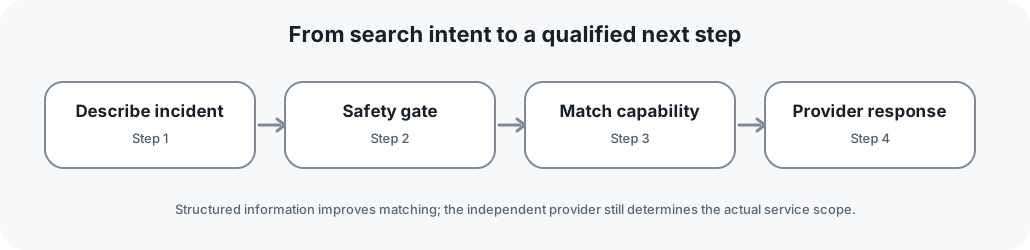
The request is structured first, checked against real provider capability and capacity, then offered for acceptance. Submitting does not guarantee provider availability.
Choose the right path
Give restoration providers the incident facts first.
A clearer incident brief helps separate urgent extraction or drying needs from source-control, contamination and larger commercial-loss considerations.
Plumbing / burst-pipe water
Capture whether the source is active, when the incident was discovered and the affected scope.
Storm / flood water
Weather and exterior-water incidents routed by location, property type and scale.
Sewage / contaminated water
Flag potential contamination so the request is treated as specialized rather than ordinary cleanup.
Commercial losses
Commercial, multifamily and larger facilities can identify scale and operating constraints.
Build an incident brief
Organize the facts before requesting provider matching.
For providers
Apply with service area, response coverage and restoration capabilities.
How it works
Useful intake before provider contact.
The site organizes and routes requests; the independent provider remains responsible for the actual service, site assessment, pricing and contract.
1 — Describe the incident
Source, timing, active water and affected areas.
2 — Check provider fit
Location, scale and capability are matched against active coverage.
3 — Provider responds
A provider decides whether it can safely and appropriately take the request.
Do not enter an area with electrical, fire, structural or contaminated-water hazards. If anyone is in immediate danger, contact the appropriate local emergency service or utility first. This matching service does not provide a safety clearance.
Ready